Jan 7, 2026
Salesforce Isn’t a CRM Anymore: The Quiet Shift Toward Decision Intelligence
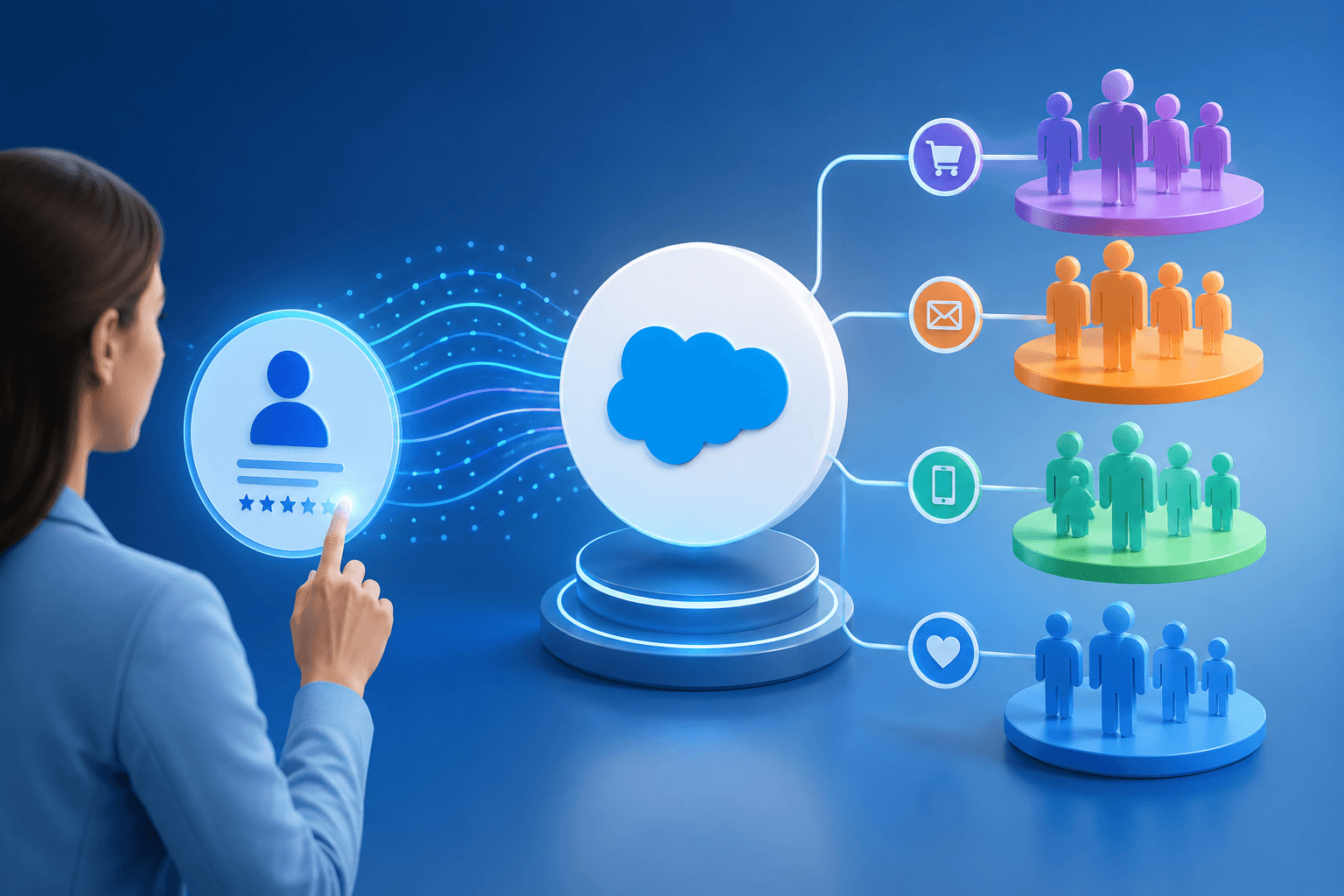
What started out as a contact tracking system has developed into something much more significant. Salesforce has progressed through distinct stages: CRM, revenue platform, and decision intelligence. Leaders should use it differently now that they are aware of this process. Businesses seeking guidance can benefit from a Salesforce consulting company in Saudi Arabia to align this shift with their regional strategies.
When Salesforce Was a CRM
The early success of Salesforce came from its ability to organize customer data. Sales teams used dashboards, updated pipelines, and tracked calls to respond to simple inquiries like "Who is the buyer?". What phase of the transaction is it in? What took place during the previous quarter?
Salesforce served as a memory bank at this point. Reactive, but still valuable. After steps were taken, insights emerged. Experience and intuition guided the decision-making process, with statistics serving as a supporting factor rather than taking the lead.
This was CRM in its traditional form, with reporting built on top of record keeping. For example, CRM for Bahrain SMEs could efficiently manage customer data and reporting during this phase.
The Rise of the Revenue Platform
Salesforce went beyond sales tracking as businesses got more complex. The platform was converted from a sales ledger to a revenue engine by Marketing Cloud, Service Cloud, Commerce, and CPQ.
One department no longer owned all of the revenue. Demand generation, transaction execution, fulfillment, renewals, and service results were all linked by Salesforce. At last, executives could observe how marketing expenditures impacted pipeline quality or how customer satisfaction affected upsells.
Salesforce was no longer responding to the question "What happened?" at this time. "Why did it happen?" was the first question it addressed. Instead of being a result, revenue became a system. Nevertheless, human interpretation of facts and forecasts played a major role in decision-making. Companies often collaborate with a Salesforce partner GCC to maximize these insights across multiple departments.
Salesforce as Decision Intelligence
Salesforce is taking on a more significant role these days. Instead of waiting for users to decipher charts, the platform increasingly suggests actions, thanks to embedded AI, predictive models, and real-time data signals.
Salesforce identifies deal risk rather than asking sales managers to examine it. It assesses current buying signals, behavior patterns, and past results collectively rather than forecasting using historical averages.
Decision intelligence refers to systems that support judgment without taking its place. Pricing changes, client retention tactics, sales prioritization, and even operational time are now influenced by Salesforce. The platform is no longer inactive. It takes part.
Salesforce does more than just speed up teamwork. It is influencing the process of making decisions. Businesses looking to scale can integrate insights from growth strategy consulting UAE to align decision intelligence with broader organizational objectives.
Why Does This Matter Now?
Businesses who continue to use Salesforce as a reporting tool fail to recognize its full potential. Decision intelligence rewards intentional design, clean data, and clarity. Adapting organizations benefit from earlier signals, increased focus, and fewer blind spots.
Looking Ahead, Not Back
The true transformation of Salesforce is not technical. It's conceptual. It has shifted from reflecting on the past to influencing the future. The question now is whether teams are ready to use Salesforce to help them make better decisions rather than what it can accomplish.
Frequently Asked Questions
Why is Salesforce no longer considered just a CRM?
Salesforce now connects sales, marketing, service, commerce, and analytics into one system. Its focus has shifted from storing customer data to influencing revenue decisions across the entire customer lifecycle.
What does decision intelligence mean in Salesforce’s context?
Decision intelligence refers to Salesforce using data patterns, predictions, and AI driven insights to suggest actions, highlight risks, and guide priorities instead of only displaying historical performance.
How does this evolution affect sales teams?
Sales teams receive earlier warnings, clearer deal guidance, and prioritized actions. This reduces guesswork and helps reps focus attention where outcomes are most likely to improve.
Is decision intelligence replacing human judgment?
No. Salesforce supports decision making rather than replacing it. Humans still decide, but with stronger context, faster signals, and fewer assumptions driving those choices.
What should companies change to benefit from this shift?
Organizations must invest in data quality, clear processes, and thoughtful configuration. Decision intelligence works best when the system reflects real business behavior, not fragmented inputs.
Dubai, UAEDX FutureTech DMCC, 3105, Jumeirah Bay X2 Jumeirah Lakes Towers, Dubai, UAE
Bengaluru, IndiaDX FutureTech India Pvt Ltd, Novel MSR Building, Subbaiah Reddy Colony Old Airport Road Marathahalli Bengaluru Karnataka 560037
Ho Chi Minh City, VietnamDX Futuretech Vietnam Company Limited, 112/5 Nguyen Van Huong Street, An Khanh Ward, Ho Chi Minh City, Vietnam
© 2025 All Rights Reserved. DX FUTURETECH